Arrow Way: Tap Away Puzzle
- 4.8
- Rating
- 1.00M
- Installs
- Free
- Price

 Analysis by App-foxy
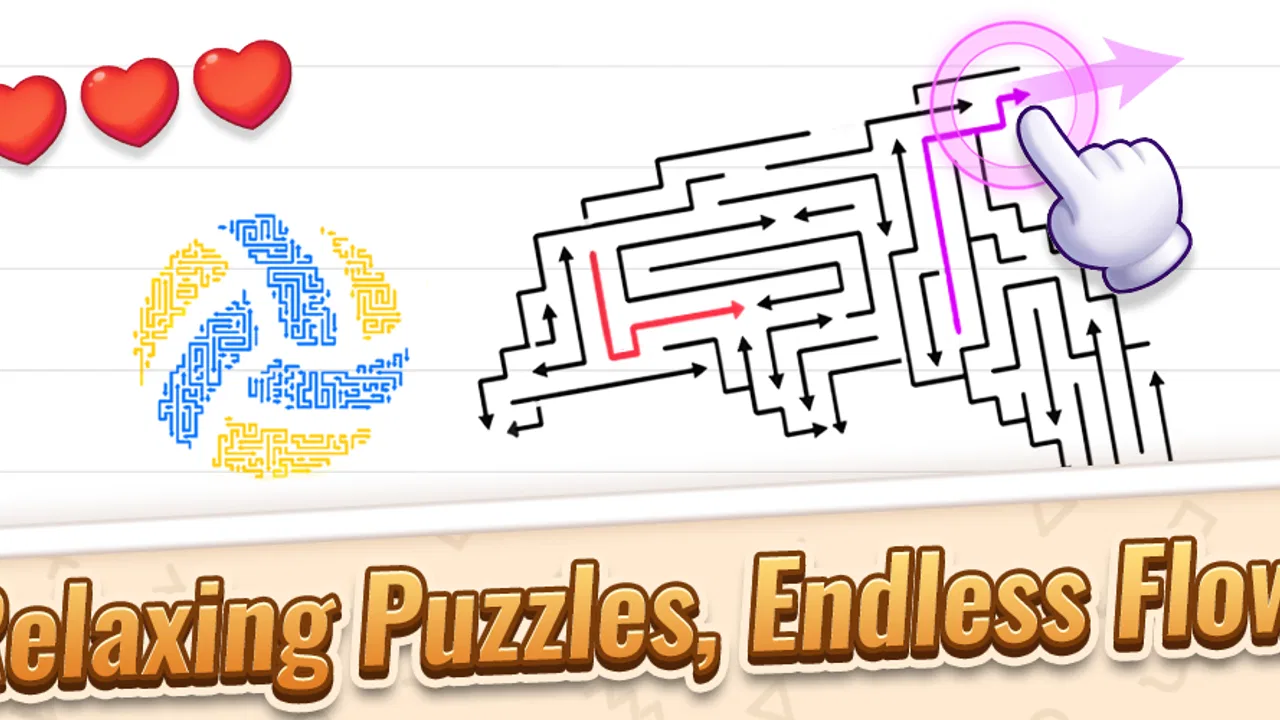
I spent time with Arrow Way: Tap Away Puzzle as a quiet, quick-play trivia game built around tapping arrows and keeping your attention on the next move. Its simple premise is easy to understand almost immediately, but the appeal is less about learning a complicated rule set and more about how a small action can create a steady, calming rhythm. The store summary, “Tap arrows, find your zen,” captures that mood better than a long feature list would.
This is a free game from JoyPop Games, aimed at Everyone, and it sits in an unusual space between a casual puzzle and a low-pressure brain break. I would not approach it expecting a deep trivia database, a story campaign, or a competitive quiz experience. Instead, I see it as something to open when I want a focused activity that does not demand a large time commitment. The strongest part of the design is its accessibility; the main question is whether the repeated arrow interaction gives you enough reason to keep returning.
How the first goals create a calm starting point
The opening experience works because it does not make the player decode a complicated interface before playing. Arrows are familiar symbols, and tapping is one of the most natural actions on a phone. That matters for a game intended for short sessions. I could pick it up without needing a tutorial-heavy explanation, and the basic objective felt readable from the first few interactions.
You May Also Like

 Blood Strike: 2.5 Anniversary
Blood Strike’s Loadouts Turn Every Drop Into a Tactical Gamble
A close look at Blood Strike’s custom loadouts: how fast access to signature weapons reshapes its battle royale rhythm, rewards preparation, and narrows the gap between fights.

 Pandora - Music & Podcasts
Pandora’s Music Is Easy to Start, but Harder to Recover
Pandora’s strength is its low-effort path from a seed to a station. Its weak spot is how much confidence it asks you to place in connection, setup, and quiet recovery.

 8 Ball Pool
 Is Built on Rivalries, Rematches, and Routine
A close look at the rivalries, rematches, shared routines, and unanswered safety questions that turn a quick pool match into a persistent mobile community.

 Samsung Music
’s Quiet Strength Is Playing What You Already Own
Its reach comes less from spectacle than from dependable access to a personal library. That simplicity is both the app’s strongest retention engine and its ceiling.

 AccuWeather: Weather Radar
AccuWeather Review: A Quick, Clear Forecast for Everyday Decisions
For everyday plans, the best forecast is the one you can understand quickly. AccuWeather makes rain timing, radar, and local conditions easy to act on, with a few trade-offs.

 Hill Climb Racing
Why Hill Climb Racing Still Turns Crashes Into One More Run
A tiny car, a bumpy hill and one more upgrade: Hill Climb Racing keeps resurfacing because its simple chaos makes every near-miss feel personal.
More From Our News Desk



For new players, the early goal is not simply to tap quickly. It is to recognize what the screen is asking for, avoid reacting automatically, and maintain a clean sequence of decisions. That distinction gives the game more substance than a basic reflex test. The best way to begin is to slow down slightly, identify the direction or pattern in front of you, and let accuracy establish the rhythm before trying to improve speed.
I also found that the game’s calm identity changes how I judge mistakes. In a frantic arcade title, a missed input can feel like a sharp interruption. Here, the same kind of error feels more like feedback that I rushed. That makes the first few sessions approachable for people who enjoy light concentration rather than pressure. It is a particularly good fit for a short break between tasks, while waiting for transport, or during a moment when a full game feels like too much effort.
That simplicity has a trade-off. Players who want an immediate sense of discovery may find the early stage restrained. There is no need to learn a large set of controls, and the central interaction remains narrow. The game therefore depends on how satisfying the timing, visual reading, and gradual challenge feel rather than on constant novelty. If you usually choose trivia games for surprising questions or broad subject coverage, this will feel like a different kind of mental exercise.
What progress feels like during ordinary play
Progress in Arrow Way is communicated less through a traditional adventure structure and more through the player’s growing control of the task. At first, I focused on understanding the arrows. After a while, I started paying more attention to consistency: whether I could keep a sequence going without letting impatience take over. That creates a personal target even when the game is not presenting a large narrative objective.
This is one of the more interesting aspects of the design. A game with only a few obvious actions can still produce a sense of improvement if the player notices better timing and fewer careless taps. The progress signal is internal as much as external. You know you are getting more comfortable because the same kind of pattern that once demanded full attention begins to feel manageable.
For practical play, I recommend treating each session as a small experiment. In one attempt, concentrate on accuracy. In another, see whether you can preserve the same accuracy while moving more confidently. This approach gives the repetition a purpose and prevents the game from becoming a mindless tapping loop. It also makes the experience more suitable for players who enjoy polishing a skill rather than collecting large amounts of content.
The game’s current version is 1.3.5, which is worth checking when deciding whether your experience matches older impressions. I found the clearest value in the basic play cycle itself, not in assuming that every session needs a dramatic unlock or a major change of format. That is important because the game should be judged as a focused puzzle experience, not as a broad progression-heavy title.
Challenge and the shape of the difficulty curve
The difficulty works best when I resist the temptation to treat every screen as a race. Arrow-based play looks simple, but visual recognition and finger movement can become less comfortable when patterns require more attention. The challenge comes from combining observation with an accurate tap, so a player who is fast but careless may struggle more than someone who takes a measured approach.
That curve is approachable for casual players because the basic interaction remains familiar. You do not need specialist trivia knowledge, a large vocabulary, or previous experience with a complex puzzle genre. The challenge is mainly perceptual and procedural: read what is present, decide what it means, and act without losing focus. This makes the game suitable for people who want to exercise concentration without feeling as if they are studying.
My most useful tip is to keep the phone steady and use a consistent tapping posture. When I changed how I held the device from one attempt to another, mistakes felt less connected to the puzzle and more connected to my hand position. A stable grip makes it easier to tell whether a difficult moment came from the game or from rushed physical input. That small adjustment can make the experience feel fairer.
Another practical habit is to stop after a short run if your attention starts to drift. Because the core action is repetitive, fatigue can disguise itself as difficulty. Continuing while distracted may produce a string of avoidable errors and make the game seem harsher than it is. Short, deliberate sessions suit the design better than forcing a long play period.
Players looking for a demanding competitive challenge should keep their expectations in check. Arrow Way can ask for concentration, but its relaxed presentation is not the same as a high-intensity reaction game. On the other hand, players who find ordinary trivia quizzes intimidating may appreciate that success is not tied to knowing obscure facts. The game tests attentiveness instead of general knowledge, which gives it a distinct place in the category.
What keeps the loop interesting, and where it may lose momentum
Retention here comes from the desire to do a little better, stay in a calm rhythm, and return for another attempt when a previous run ended through a careless decision. That is a modest form of motivation, but it can be effective. I often found myself thinking, “I can handle that more cleanly next time,” which is enough to support another short session.
The danger is repetition. If you need frequent unlocks, a strong story, changing characters, or a wide selection of modes, the central arrow loop may not provide enough variety. The game’s identity is narrow by design, and that focus is both its strength and its limitation. It avoids clutter, but it also leaves less room for players who want a constantly expanding experience.
There is also a subtle retention pressure created by personal perfection. Because the controls are easy to understand, mistakes can feel attributable to the player rather than to confusing rules. That can be motivating when I am close to a better result, but frustrating when I repeat the same error. The healthiest way to play is to use that pressure as a reason to refine technique, not as a reason to keep tapping after the experience has stopped being relaxing.
In-app purchases range from $0.99 to $5.99 per item. Since the game is free to start, that makes it easy to test the core loop before deciding whether any optional spending fits your habits. I would recommend waiting until you know whether the basic experience holds your attention. A calm puzzle should not become a purchase-driven routine, and the game is most appealing when the player feels in control of the session rather than pushed into extending it.
Who will enjoy it in everyday situations
I can imagine opening Arrow Way during a five-minute pause at work, using it as a transition between demanding tasks. The arrow interaction gives the mind something precise to follow without requiring the emotional investment of a story game. It can also work before bed for someone who prefers a simple focus exercise, although anyone sensitive to screen stimulation should still decide whether phone play fits their routine.
It is a good match for casual players, people who like minimalist puzzle mechanics, and anyone who enjoys improving through repetition. The Everyone rating also makes its presentation broadly approachable. I would particularly recommend it to a friend who says that conventional trivia games are stressful but still wants something that feels mentally active.
I would skip it if your main reason for downloading a trivia title is to answer questions about history, science, entertainment, or current events. This is not the kind of game I would choose for social quiz nights either. A question-and-answer app is better when conversation and knowledge recall are the point. A more elaborate puzzle game is also a better choice if you want a campaign with clearly defined stages, richer customization, or a large variety of mechanics.
Compared with typical trivia alternatives, Arrow Way removes the knowledge barrier and replaces it with visual focus. Compared with ordinary tap games, it feels more deliberate because the player must interpret the arrows instead of simply pressing as quickly as possible. That middle ground is the reason it stands out. It is neither a traditional quiz nor a pure reflex challenge, and its success depends on whether you enjoy that quieter form of engagement.
My verdict on the progression and pacing
After using it as a short-session game, I think the progression succeeds when measured by attention, confidence, and the urge to clean up a previous attempt. The early goals are clear, the improvement signals are easy to recognize, and the difficulty encourages careful play rather than demanding specialist knowledge. The pacing is strongest when I let the game remain a small daily activity instead of expecting it to carry a long gaming session.
Its limitations are equally clear. The focused loop may not satisfy players who need constant unlocks or major changes in presentation. Repetition can become noticeable, and the personal challenge may not be enough for someone who prefers external rewards or competitive rankings. Those are not minor details; they define who should download it and who should look elsewhere.
JoyPop Games has made a free trivia-category game that is easy to approach and more thoughtful than its one-line premise might suggest. With an average rating of 4.8 from around 9.2 thousand ratings and over 500 thousand installs, it has attracted a substantial audience, while the listed release date of January 8, 2026, places it among newer options in the mobile space. I would try it for the low barrier to entry, not because it promises endless variety.
My recommendation is simple: choose Arrow Way when you want a calm, focused arrow puzzle that rewards patience and small improvements. Give it a pass if your ideal trivia game needs factual questions, multiplayer energy, or a large progression system. For the right player, its restraint is exactly what makes it useful: a compact mental reset that asks for attention, gives immediate feedback, and lets you leave after a few minutes without feeling that you abandoned a complicated campaign.
FAQs for Arrow Way: Tap Away Puzzle
01What is the main objective of Arrow Way: Tap Away Puzzle?
Arrow Way: Tap Away Puzzle challenges players to clear a board filled with directional arrows by tapping them in the correct sequence. Each tap affects the direction of surrounding arrows, requiring strategic thinking and planning to solve each level efficiently. The game's main objective is to clear all arrows while using the fewest moves possible.
02Is Arrow Way: Tap Away Puzzle free to play?
Yes, Arrow Way: Tap Away Puzzle is free to download and play, with optional in-app purchases available. These purchases can enhance the gaming experience by offering hints or additional levels. However, all levels can be completed without spending money, making it accessible for all players.
03Does Arrow Way: Tap Away Puzzle require an internet connection?
Arrow Way: Tap Away Puzzle can be played offline, allowing users to enjoy the game without an internet connection. This feature is particularly convenient for users who wish to play during travel or in areas with limited connectivity. However, some features, like leaderboards and in-app purchases, require internet access.
04Are there any age restrictions for playing Arrow Way: Tap Away Puzzle?
Arrow Way: Tap Away Puzzle is suitable for players of all ages, offering a family-friendly gaming experience. The game is designed with intuitive controls and progressively challenging levels, making it accessible for younger players while still engaging for adults who enjoy puzzle-solving.
05What are the device requirements for Arrow Way: Tap Away Puzzle?
Arrow Way: Tap Away Puzzle is compatible with both Android and iOS devices. It requires Android version 5.0 or higher and iOS 10.0 or later. The game is optimized for smooth performance across a range of devices, ensuring an enjoyable experience without significant lag or crashes.
Pros
- Intuitive controls for easy gameplay.
- Visually appealing graphics and animations.
- Challenging levels that stimulate the mind.
- Suitable for all age groups.
- Offline play available for convenience.
Cons
- Ads can be intrusive during gameplay.
- Limited free levels before purchase.
- Occasional lag on older devices.
- In-app purchases can be pricey.
- No multiplayer mode available.

Arrow Way: Tap Away Puzzle
Gallery